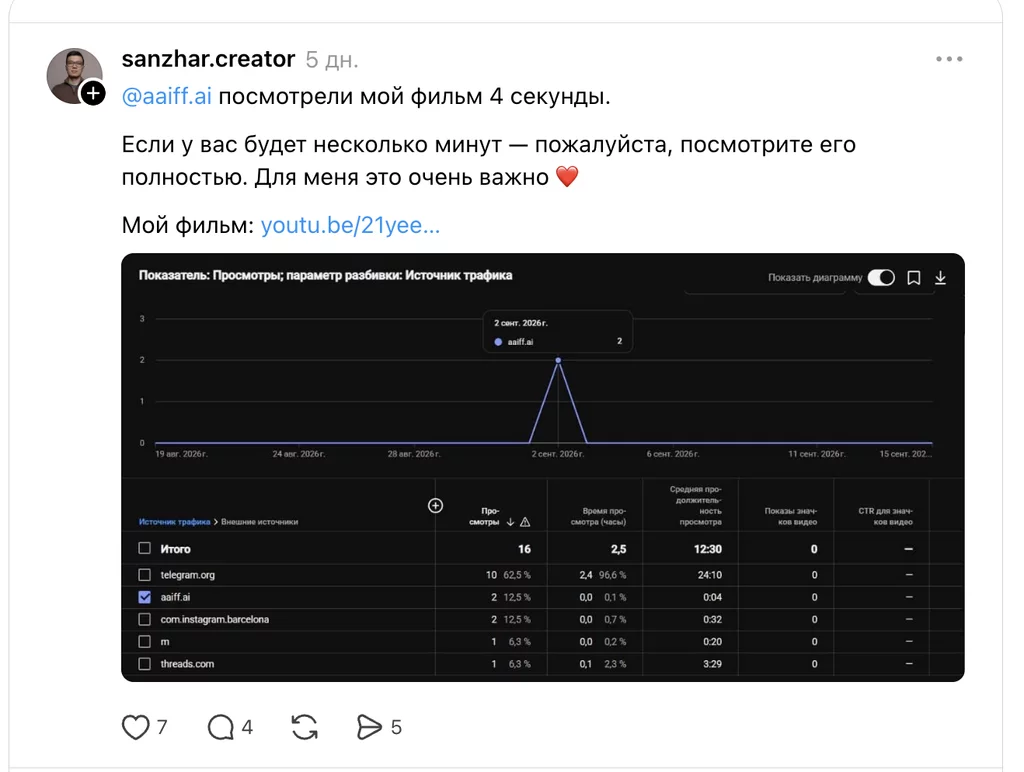
The Astana AI Film Festival (AAIFF), boasting a total prize fund of $2 million, attracted submissions from creators across 125 countries. However, following the announcement of shortlisted nominees, participating directors published video analytics showing view durations of merely a few seconds, sparking an intense debate regarding festival evaluation procedures. RAEM.KZ investigated the telemetry data, festival regulations, and responses from the organizing committee.
The festival received more than 8,000 short-form video entries generated using cutting-edge artificial intelligence tools like Midjourney, Runway Gen-3, Sora, and Kling. With high stakes and global exposure, the competition represented one of the world’s most lucrative generative art contests.
Eight Days to Review 55 Days of Video Content
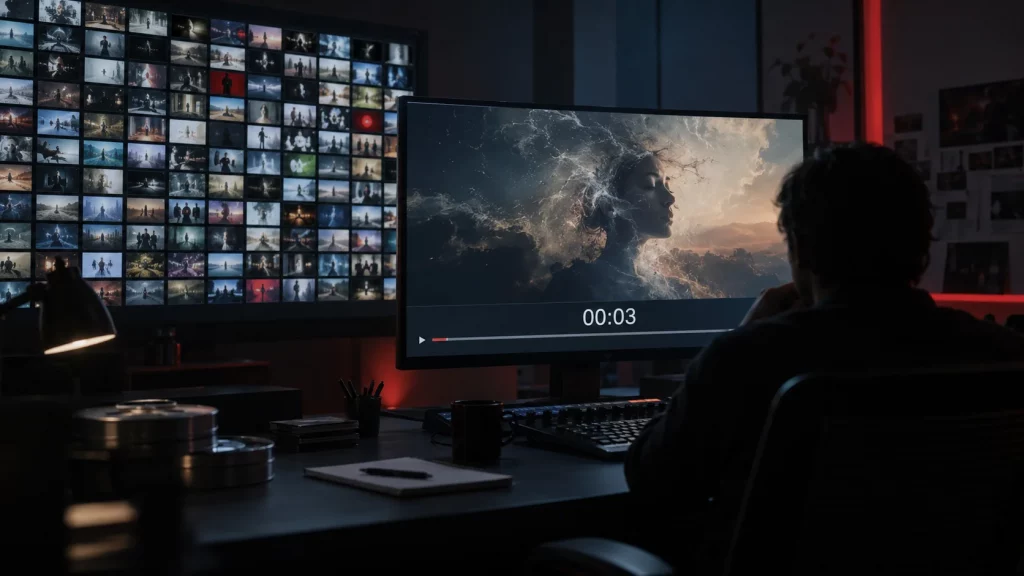
Aggregated across 8,000 submissions averaging 5 to 10 minutes in length, the total submitted footage exceeded 1,300 hours — roughly 55 continuous days of playback. Independent filmmakers noted that the official screening window lasted barely eight days between application closing and nominee publication, raising mathematical questions about how any human panel could evaluate the complete corpus.
The Three-Second Telemetry: Technical Explanations
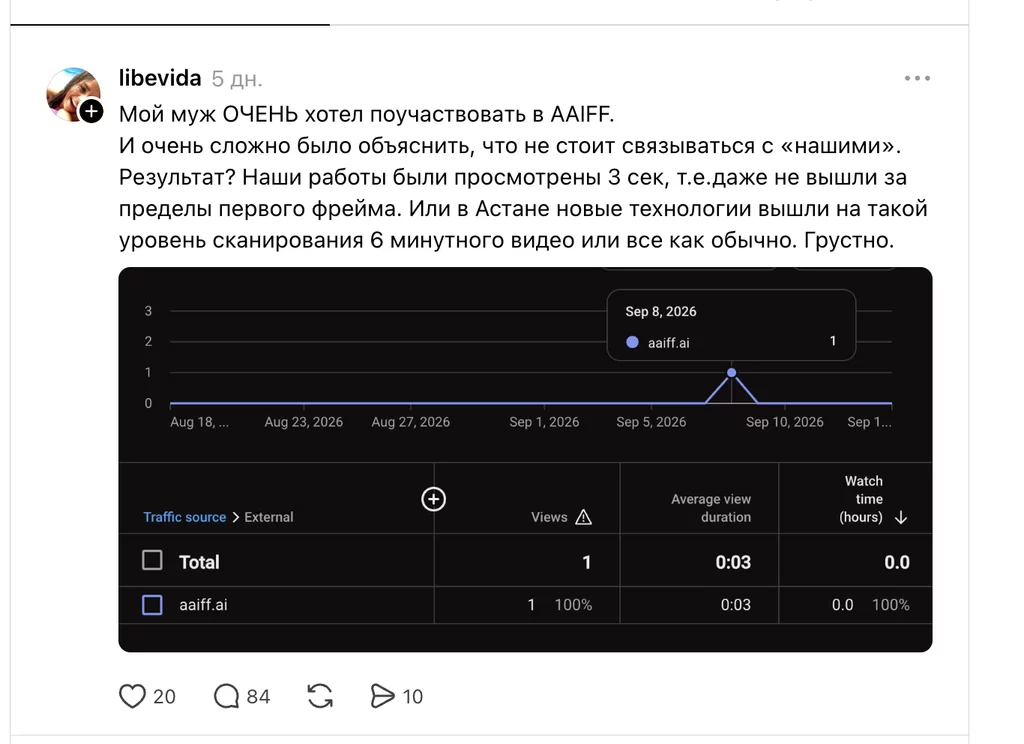
Filmmakers hosting entries on private unlisted Vimeo and YouTube links shared screenshots showing average view times of 3 to 15 seconds before the video player was closed. Some participants claimed their entries were evaluated by automated bots or skimmed superficially without assessing narrative pacing, sound design, or visual coherence.
In response, festival organizers explained that pre-screening involved a multi-tiered filtering mechanism. Submissions were initially screened for technical compliance (minimum resolution, audio quality, and verification of AI generation workflows). Video files uploaded directly to festival internal servers or downloaded locally by reviewers would not generate telemetry pings on external hosting platforms.
Rule Changes and Jury Transparency
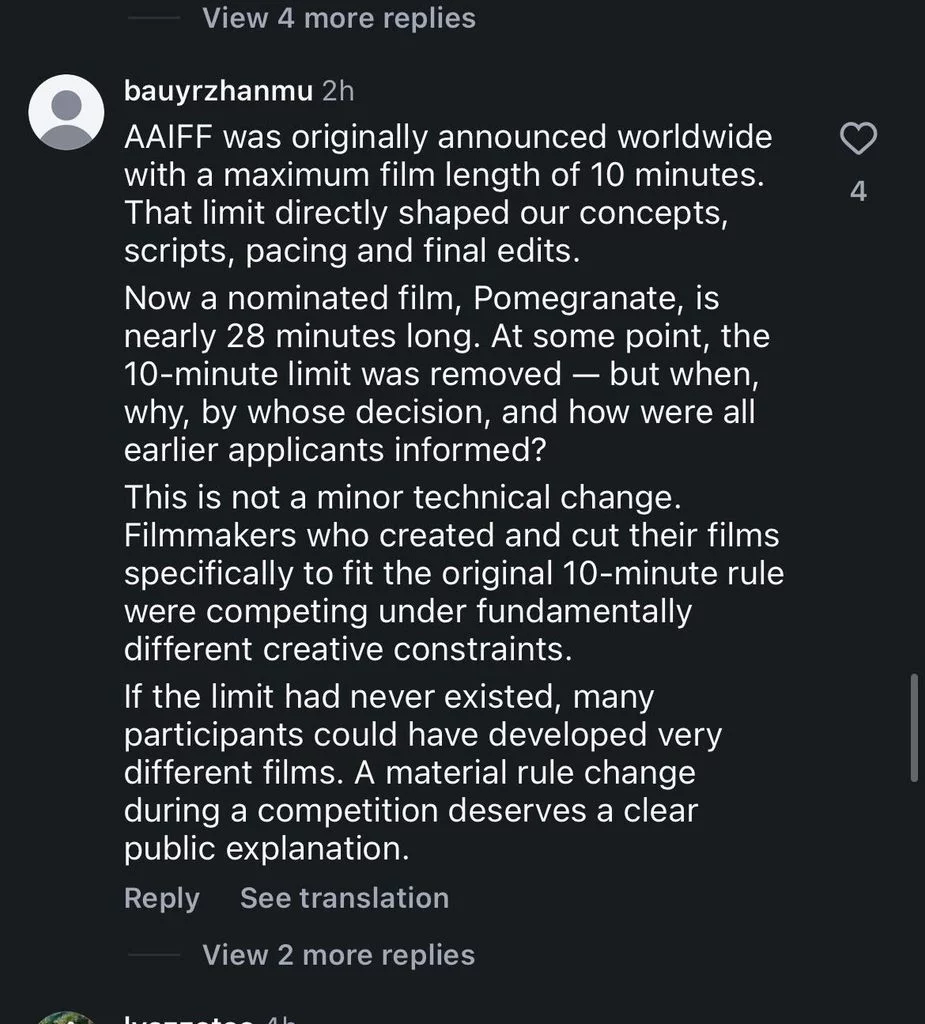
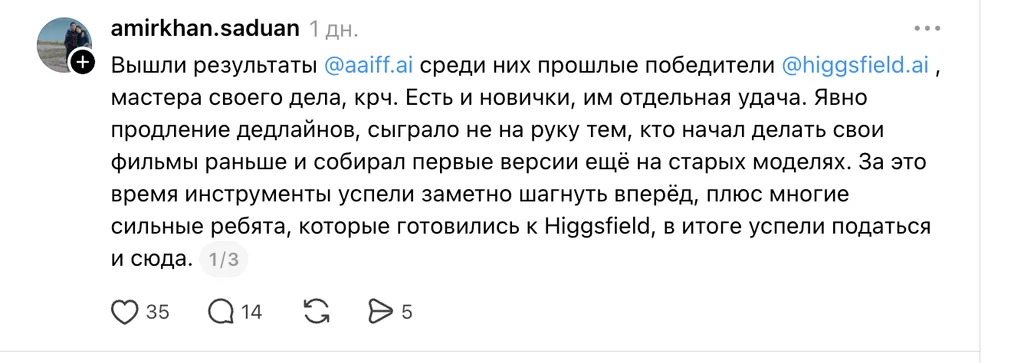
Several creators voiced frustration over shifting duration guidelines. Originally, the festival rules stated a 10-minute upper limit, but subsequent communications suggested that works of any length were accepted. Furthermore, participants demanded the publication of the preliminary screening committee members, noting that while the celebrity grand jury had been announced, the identity of the frontline pre-selectors remained undisclosed.
Lessons for Future Creative AI Competitions
Despite the controversy, the Astana AI Film Festival proved the astronomical global appetite for generative cinema. For future editions, festival experts recommend introducing transparent scoring rubrics, public logs of initial screening stages, and clear communication regarding how technical pre-filtering is conducted. As generative video models accelerate, establishing trustworthy evaluation standards will be essential for the credibility of digital film festivals worldwide.