
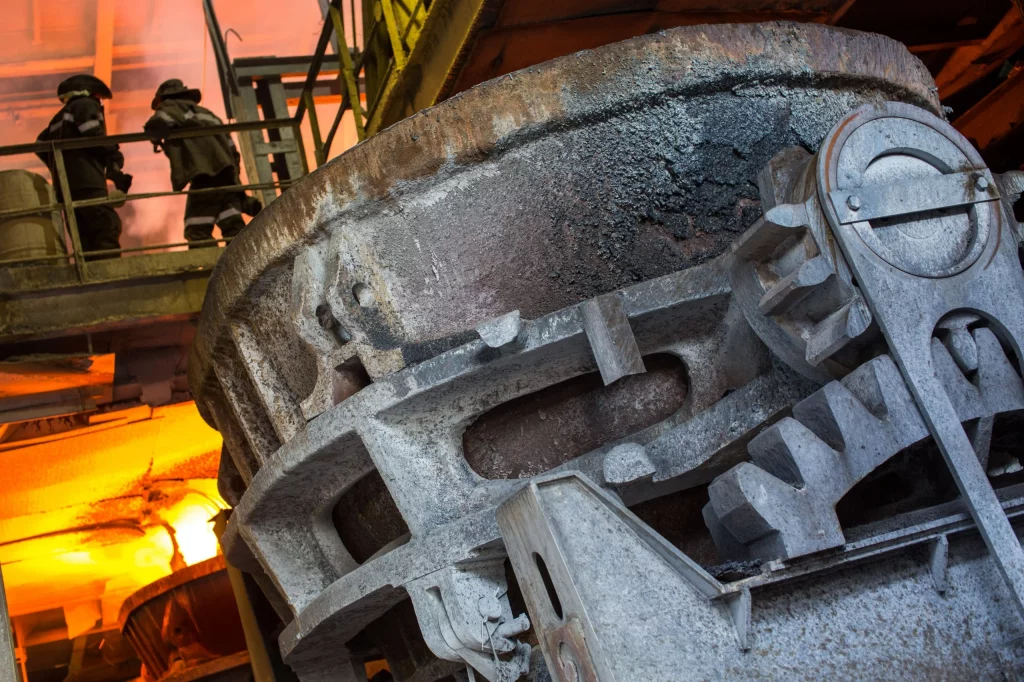
In Balkhash, plans have been announced to build a modern copper smelter with capital expenditure projected at 750 billion KZT. Targeted annual industrial emissions are pegged at 5,000 metric tons, compared to roughly 60,000 tons emitted by the legacy Balkhash facility—a twelve-fold reduction.
This metric contrasts the engineering projection of a future greenfield complex against the current output of an eight-decade-old smelter. The plant has yet to be built, and environmental performance can only be verified after operational commissioning.
Project Scope and Commercial Timelines
The investment agreement was presented to Prime Minister Olzhas Bektenov during an inspection visit to the Karaganda region on October 8. Construction is outlined under a bilateral agreement with Qazaq Smelter LLP.
Core design specifications include:
| Parameter | Target Specification |
|---|---|
| Private Capital Expenditure | 750 billion KZT |
| Nameplate Refining Capacity | 300,000 tons of cathode copper annually |
| Construction Kickoff | 2027 |
| Commercial Commissioning | 2030 |
| Permanent Industrial Headcount | Approximately 1,200 jobs |
These metrics represent forward capital targets and engineering projections. They materialize progressively as civil works conclude and systems ramp to baseline utilization.
Cathode copper represents refined metal processed through electrolytic refining. Yielding high physical purity, it serves as the essential input stock for downstream industrial alloys, wire rods, and electronic components.
Analyzing the Twelve-Fold Emission Reduction Claim
Comparing 60,000 tons against 5,000 tons indicates an absolute theoretical reduction of 55,000 annual tons, or approximately 91.7%.
However, official releases omit chemical compositional breakdowns and calculation formulas. Consequently, one cannot assume the reduction applies uniformly across sulfur dioxide, particulate dust, or carbon dioxide emissions.
Rigorous environmental evaluation requires apples-to-apples metrics: baseline pollutant classifications, factory utilization assumptions, and complete scope coverage across smelting, roasting, and slag operations.
Furthermore, point-source plant emissions differ from ambient air quality across municipal districts. Balkhash’s local airshed reflects the combined output of heating plants, vehicle exhaust, and legacy tailings facilities.
Engineering Cleaner Pyrometallurgical Refining
Proven industrial technologies exist to curb smelting pollution. Primary copper smelting releases particulate dust and sulfur dioxide gas. Baghouses and electrostatic precipitators capture dust, while concentrated sulfur dioxide off-gases are channeled into contact sulfuric acid plants.
These mitigation practices are documented in technical standards by the US Environmental Protection Agency. Efficacy depends upon hood capture aerodynamics, gas conditioning, and catalyst conversion efficiency.
The Balkhash design includes an off-gas recovery unit producing 1.5 million tons of commercial sulfuric acid annually, alongside flash smelting furnaces, an electrolytic refinery, and dedicated slag recycling units. Metallurgical copper recovery is projected at 98%.
The 98% recovery figure defines raw ore yield into finished metal, which operates independently from off-gas scrubbing efficiency.
The Future of the Legacy Balkhash Facility
The legacy Balkhash smelting complex has operated continuously since 1938. Throughout 2026, Kazakhmys has been implementing a 21.8 billion KZT refurbishment program repairing furnaces, cranes, and structural bays.
Official statements do not specify whether the 1938 plant will be decommissioned, repurposed, or operated concurrently once the new 300,000-ton facility opens in 2030.
This distinction is critical for local residents. The 5,000-ton emission metric models the greenfield plant alone. Real air quality improvement hinges on how legacy capacity is retired or operated.
Verification Milestones Ahead
The initiative pursues dual objectives: expanding domestic value-added copper output and curbing regional environmental degradation. Production volumes evaluate the former; continuous sensor telemetry must verify the latter.
Post-commissioning auditing will require published continuous emission monitoring data (CEMS) for sulfur dioxide and particulates, backed by neighborhood ambient sensor readings under full production runs.
For Balkhash, project success will deliver high-paying manufacturing careers alongside independently verified environmental compliance. Those audit logs will determine whether cleaner metallurgy becomes reality.



