Photo: manfredrichter / Pixabay
Kazakhstan has changed its waste collection rules: anyone transporting their own waste outside the centralised collection system must send it for sorting (kursiv.media). The amendments require waste to be collected separately in at least three categories. Waste can go straight to landfill if there are no local facilities or they lack sufficient capacity.
Direct landfill disposal depends on local capacity
The amendments were introduced by Order No. 297, signed by the acting ecology minister on 9 November 2026. The requirement applies to waste producers who transport their own rubbish outside the centralised collection system. They must store waste separately by category and deliver it to household solid waste sorting facilities.
Waste may be sent directly to landfill if the town or village has no waste sorting or energy recovery facilities. Insufficient capacity at these facilities is another permitted reason.
This exception does not override the Environmental Code’s bans.
If a particular type of waste is banned from landfill, the absence of facilities or a lack of capacity does not make its disposal there legal.
Batteries must be collected separately, and sorted waste must stay separate
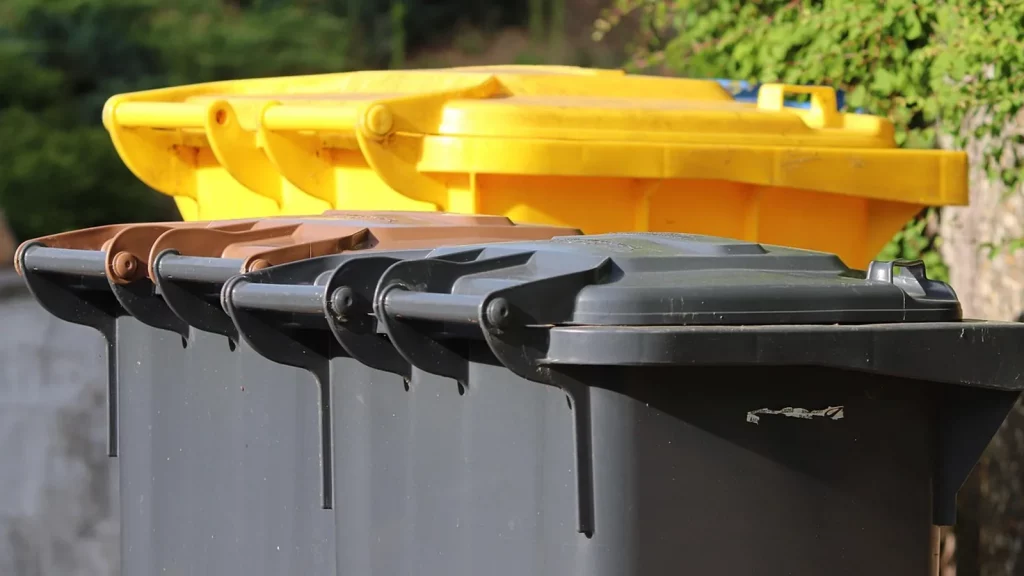
Primary waste producers must ensure separate collection in at least three categories. The same minimum applies to specialist organisations that collect and transport waste outside the centralised collection system.
The dry category includes paper and cardboard. Metal and plastic go there too, along with glass. The wet category covers food scraps and organic matter, including other waste in this category.
Hazardous components must be collected separately.
This category includes electrical and electronic equipment. It also covers mercury-containing and medical waste. Batteries and rechargeable batteries must also be separated from other rubbish, as must other hazardous components.
This waste must be handed over to specialist organisations with the appropriate licences. Waste that has already been sorted must not be mixed at any later stage of handling. The ban also applies during transport: separately collected waste must not be combined when it is taken away.
Construction waste needs collection sites of at least 12 square metres
Local authorities must provide dedicated sites for construction and bulky waste generated by residents. Each must cover at least 12 square metres. Surfacing and fencing are mandatory.
Ash from stoves used to heat private homes must be collected separately in metal containers.
Hot ash must not be put in containers for any of the three categories. Burning or glowing waste must not be put in regular rubbish bins. Snow and ice are also prohibited.
Bulky waste must not go in regular bins either. The same applies to items that could damage bins or rubbish trucks.
Ecology Ministry reported 22 projects funded with 89.4 billion tenge
According to an Ecology Ministry statement dated 19 December 2025, Kazakhstan generates more than 4.5 million tonnes of municipal waste each year (gov.kz). The ministry reported that the recycling rate had risen from 25.8% in 2024 to 28.6% in 2025.
By then, the ministry had approved 63 waste management projects for preferential financing funded by recycling fees. Of these, 22 had already received a total of 89.4 billion tenge.
A total of 185 billion tenge was allocated to this financing mechanism. The funding covers purchases of rubbish trucks. It is also intended for waste sorting and recycling projects.
raem.kz previously reported on plans to build a waste processing complex in East Kazakhstan Region.
The ministry estimates that the planned projects will raise the recycling rate to 40% by 2030.
The ministry separately reported plans to build three waste incineration plants. Two were planned for Astana and Almaty, with a third in Shymkent. The signed investment agreements provided for 293 billion tenge, with construction expected to take two to three years.
Order No. 297 takes effect after official publication
The order takes effect ten calendar days after the date of its first official publication.