Скриншот: EPISTHERA
Nikita Oger from Temirtau says that, at 16, he is developing EPISTHERA and his own language model, QEVUNI, with 126 million parameters (episthera.com). In early November, he described GERO as a service powered by Gemini; after rebranding, he reported that he was developing his own model. Nikita builds his home infrastructure himself and balances development with school. In exchanges with Nikita, raem.kz learned why the cost of using third-party AI pushed him to work on his own.
Nikita Oger develops the platform and sets up the server himself
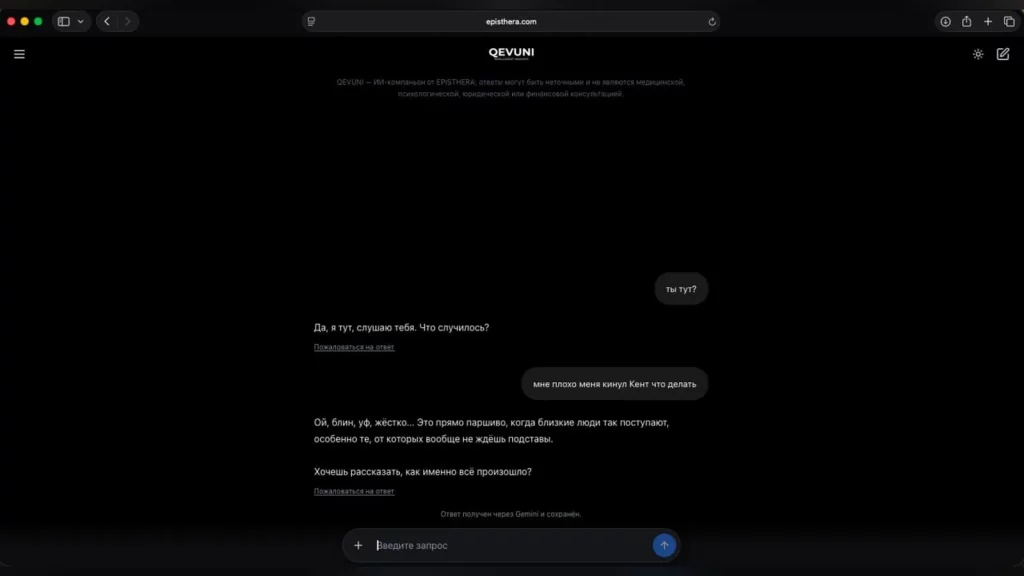
Nikita describes EPISTHERA as an AI companion for conversation and support in everyday situations. Users send messages to the service and receive AI responses. Making these conversations accessible is a goal the developer set out under the project’s previous name.
“My goal is to make artificial intelligence more accessible and useful to people.”
Nikita says he develops the platform, connects the AI and adds features himself. He also handles server setup. He balances work on the service with school.
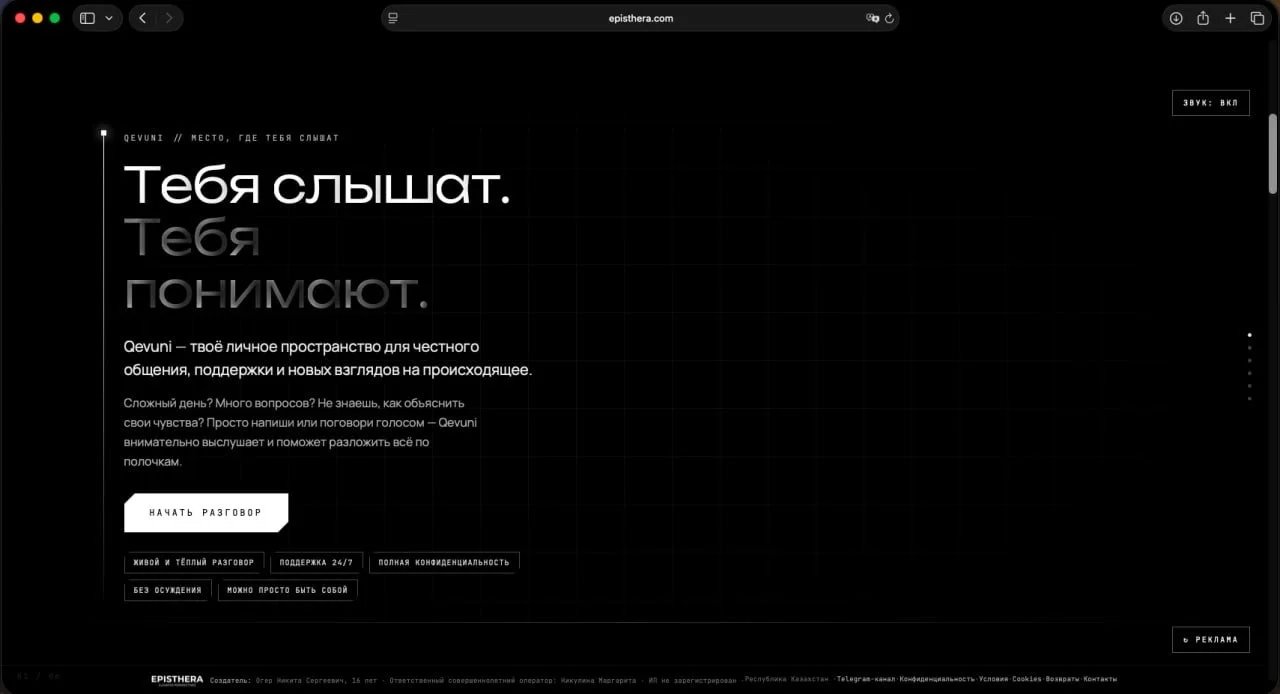
Screenshot of a dark homepage for a conversation and support service. · Screenshot: EPISTHERA
GERO became EPISTHERA
Nikita says GERO already had working registration and login in early November. The connected AI responded to users’ requests. At the time, the developer was using Gemini while also working on his own model, GeroLM.
“The project currently uses the Gemini model, but I am actively working on creating and developing my own AI model, GeroLM, with the aim of gradually switching to my own AI system.”
Nikita later announced a rebrand: the project became EPISTHERA, and its language model became QEVUNI. He sees his own model as a way to rely less on third-party providers in the future. He describes the switch as the goal of his work.
White geometric logo and name on a black background. · Screenshot: EPISTHERA
Plus purchases were disabled, though message limits were already set
Nikita says free GERO users could send 30 messages a day in early November. He had set a limit of up to 100 messages for the Plus subscription. However, the option to buy a subscription was disabled.
“I don’t want to charge people to talk to AI, so I’m considering other ways to develop and fund the project.”
Nikita described these terms before the name change. Buying Plus was meant to give users more messages, but the developer is considering other ways to fund the service.
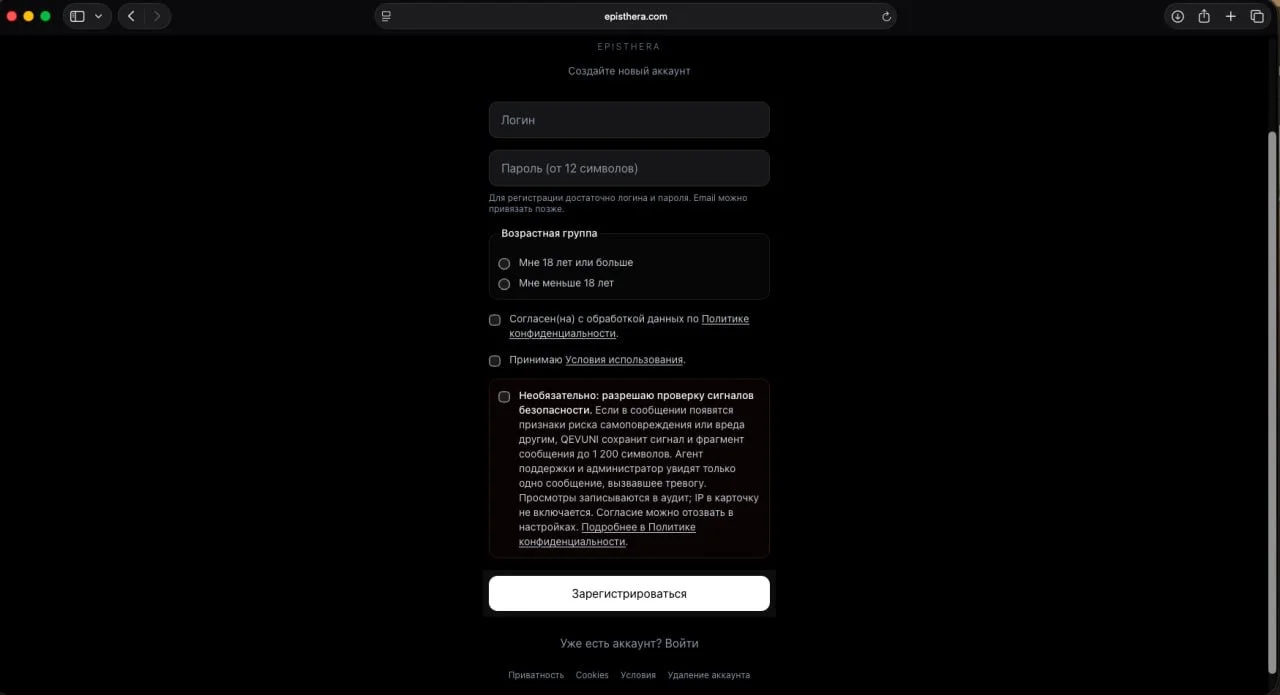
A registration form on a dark website page in a browser. · Screenshot: EPISTHERA
Every request to a third-party model costs money
Nikita says the financial difficulty comes from paying for requests to third-party models. When a user sends a message, the project pays for the request. Those costs will grow as the audience increases.
The developer points to this dependence as the reason he is working on his own neural network. He wants to gradually enable the AI companion to run independently. For him, reducing reliance on external providers would make it possible to keep conversations accessible without paying for each message.
“Gero is an AI companion created for conversation, support and interaction with users.”
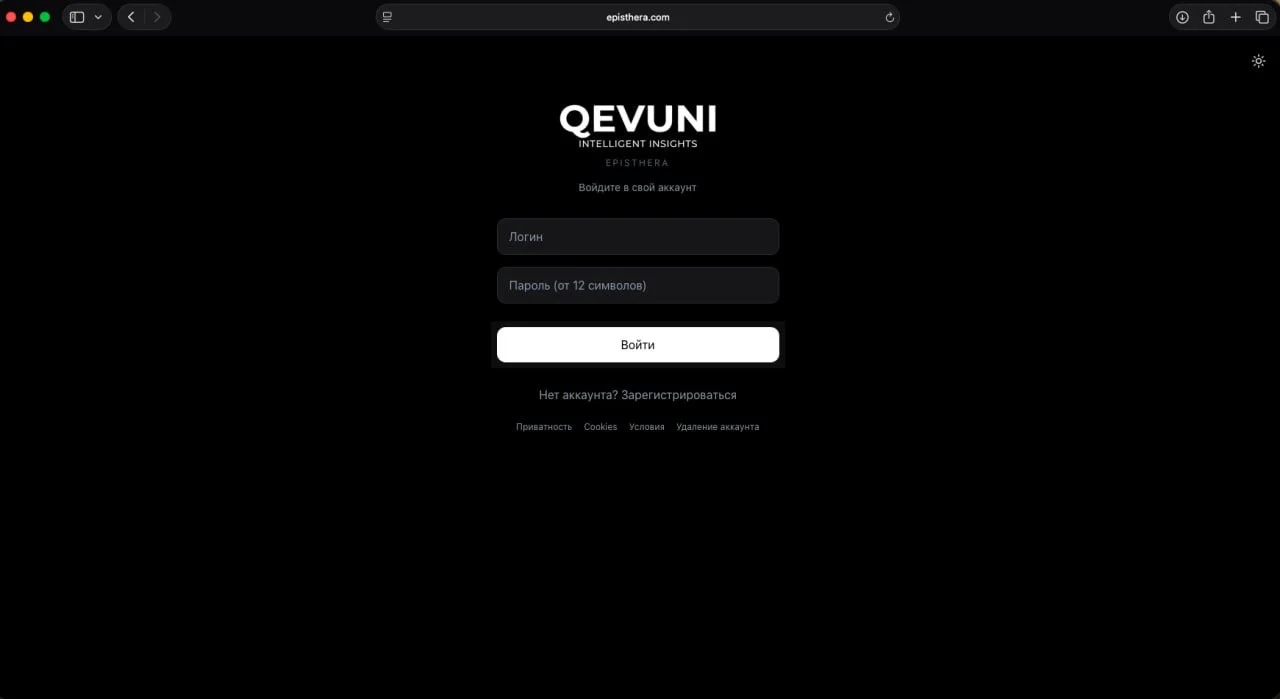
A dark login page with a logo and sign-in fields in a browser. · Screenshot: EPISTHERA
At home, Nikita uses separate computers for development and running services
Nikita says he has two computers for the project. One serves as a server, hosting services and running work on the neural network. The other is his main development computer.
Nikita uses SSH to manage the server. This connection lets him run commands from another computer. The developer says he uses it to manage the server remotely and handle most tasks.
“I build and configure all the infrastructure myself.”
Nikita uses Ubuntu Server and Docker to set up the server side. These tools let him run the services the project needs. He uses his home infrastructure both for the live platform and for work on his own neural network.
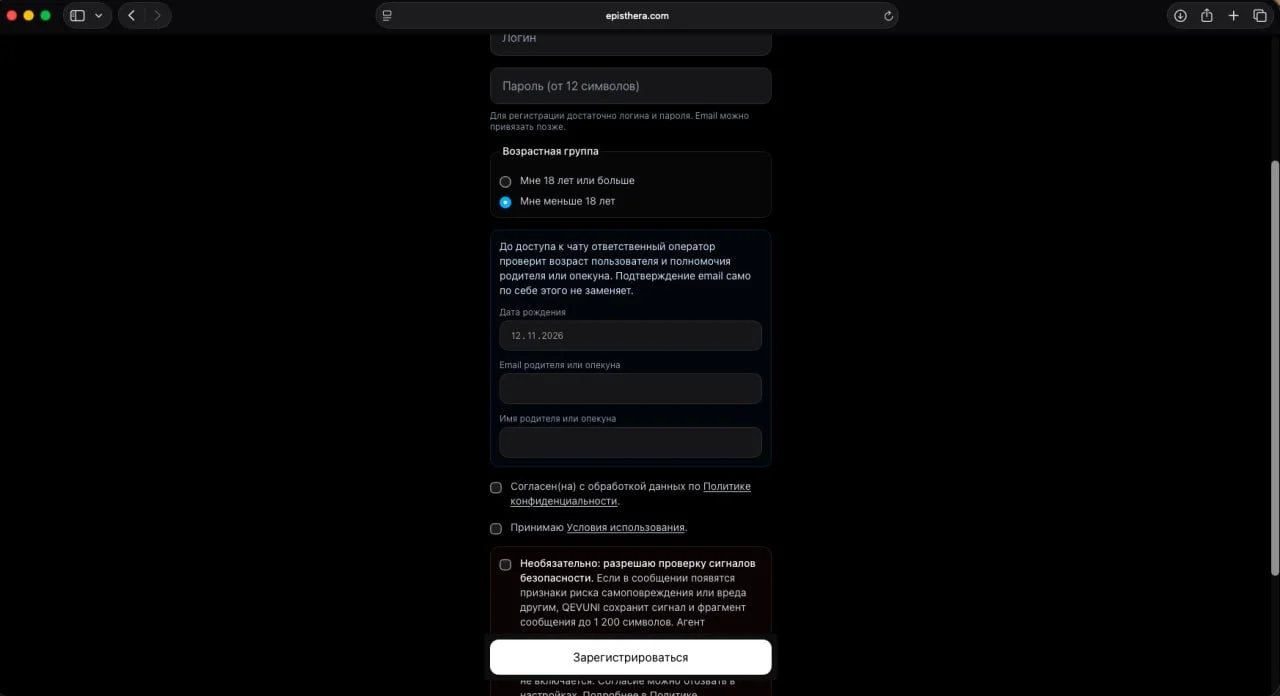
Screenshot of a dark registration form with fields for a minor and their parent or guardian. · Screenshot: EPISTHERA
QEVUNI is being developed on home hardware
Nikita says he uses an Intel Xeon E5-2640 with six cores and 12 threads. His listed configuration also includes 16 GB of RAM, an X79M2-Q motherboard and a 1 TB drive. For AI work, he lists an NVIDIA GTX 1660 Super with 6 GB of video memory.
Nikita says QEVUNI has 126 million parameters. That is how he describes the current size of his own model, which he continues to develop. His intention is to create his own AI system and gradually switch the project to it.
The developer is measured in his assessment of what his current hardware can handle. “I understand that the current server capacity is not enough to develop the project on a large scale.” He plans to expand the infrastructure and buy more powerful equipment.
Under-18s get access after a parent confirms permission
Nikita says users select an age group when registering. If they are under 18, the service asks for a parent’s email address. It sends an email to that address requesting permission to use the platform.
Once permission is confirmed, the service grants access, the developer explains. He also said he had added restrictions on chat responses for users under 18. Nikita described this feature after the project’s rebrand.
Nikita’s next task is to develop QEVUNI: he continues to work on the model and plans to expand his home infrastructure.