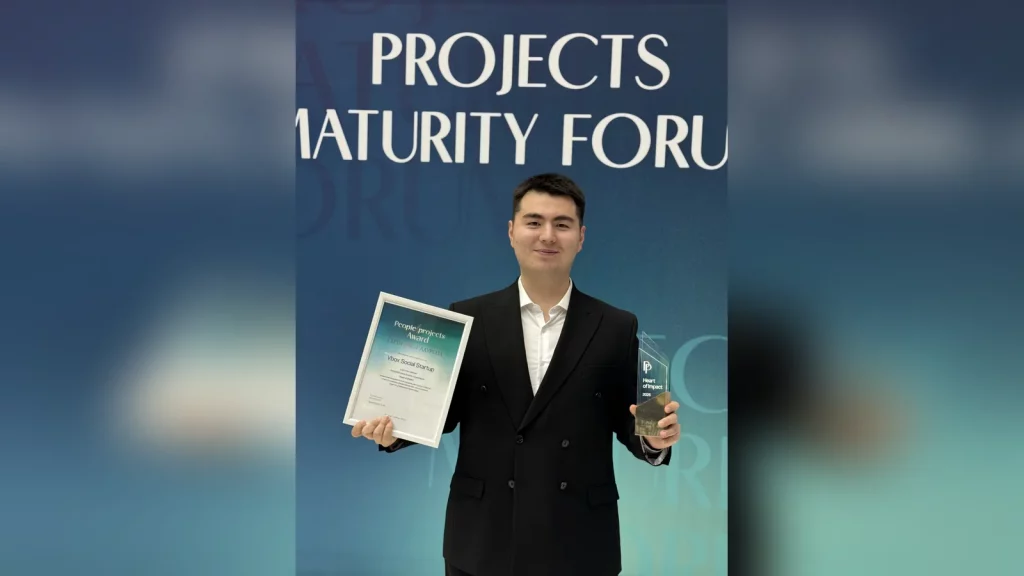
Photo: Vbox Social
Vbox Social has more than 25 micromarkets in Kazakhstan and abroad, according to founder Raiymbek Tuleshev. In November 2026, he answered raem.kz’s questions by email about the idea, the project’s funding and its expansion plans. He described Vbox as a combination of automated retail, in-house food production and social entrepreneurship.
The Vbox idea came from late nights at Astana Hub
“The idea came to me when I was working at Astana Hub and often stayed late,” Tuleshev wrote.
He noticed that people spending long hours at work or university had few options for buying fresh, proper meals, especially in the evening. He wanted to build a system that would make meals available at any time, alongside the usual snacks.
In its “30 Under 30” ranking, Forbes Kazakhstan describes Vbox Social as a project combining automated retail with social entrepreneurship and providing food in offices and universities (forbes.kz).
In the Vbox model, a micromarket is an automated food retail outlet. According to Tuleshev, the project combines these outlets with its own production and social programmes.
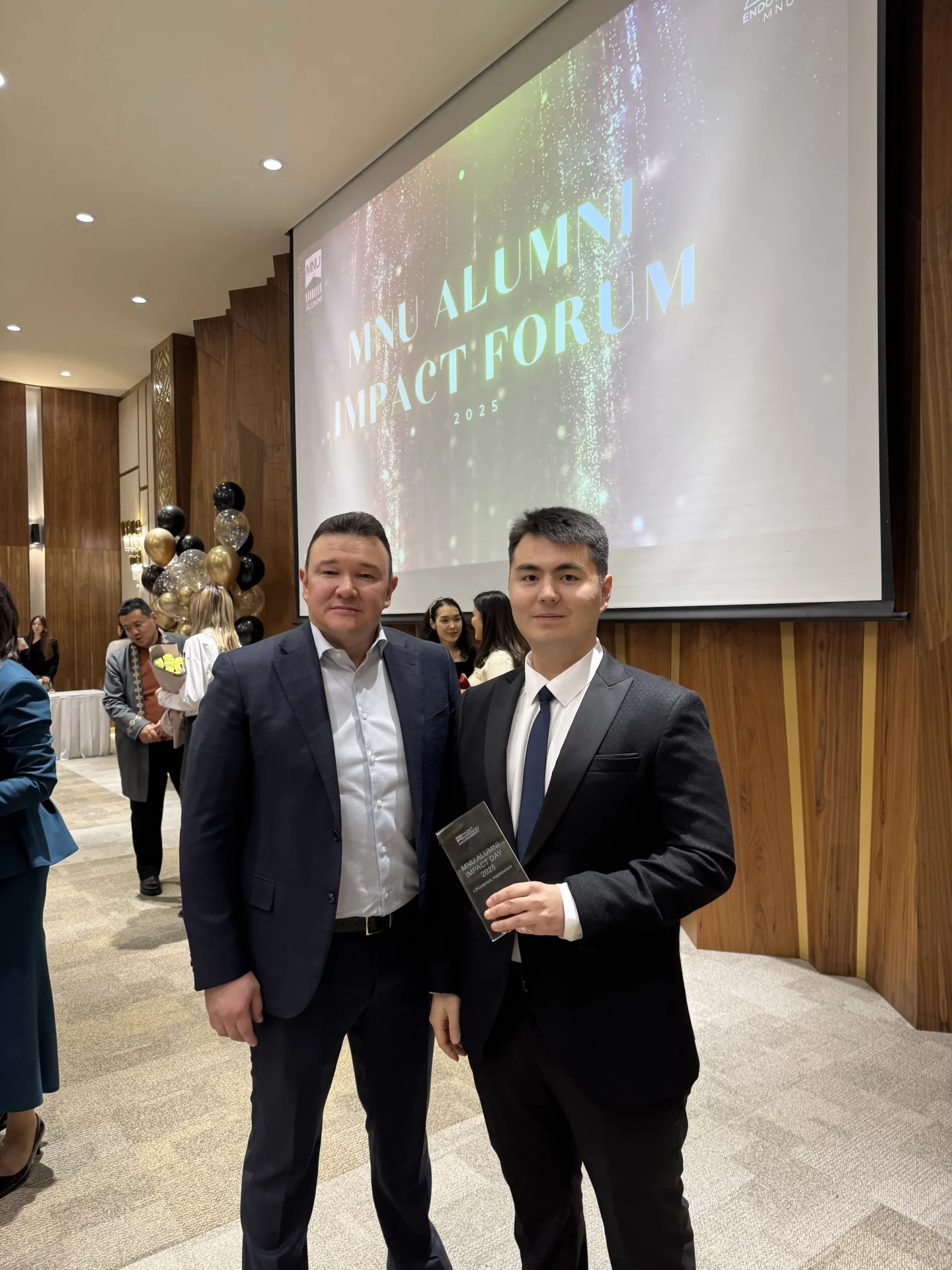
Two men in suits pose in a hall, one holding an award. · Photo: Vbox Social
More than 25 micromarkets, according to the founder
In an earlier interview with Youth.kz, Tuleshev said the project’s first machines were installed at Nazarbayev University. At the time of that interview, he reported 19 locations in Astana (youth.kz).
According to his email dated 10 November 2026, Vbox had more than 25 micromarkets in Kazakhstan and abroad. The two figures cover different areas: the earlier one referred to Astana, while the latest one covers the entire network.
The founder lists Mercedes-Benz, KPMG, Huawei, Nazarbayev University, Sergek Group and TSARKA among Vbox’s corporate clients and partners. He did not specify the relationship with each organisation in his reply.
Its own equipment and ERP system
According to Tuleshev, Vbox has its own equipment, electronics and software. Its ERP system helps the team manage sales, inventory and finances across the micromarket network.
He said the team includes specialists with technical and entrepreneurial experience, including people who have worked or currently work at EPAM and other major international companies.
More than 300 people received opportunities to train and gain experience
“For me, Vbox is not just a technology business, but also a chance to create real social change,” Tuleshev wrote.
In his 10 November email, he described a production workshop employing people with disabilities, people who grew up in orphanages, and people from socially vulnerable groups, large families and low-income families.
The founder said the aim was to give people a profession, practical skills and the opportunity to earn a living and develop.
According to Tuleshev, more than 300 people from socially vulnerable groups have had the opportunity to receive training, undertake practical placements and gain professional experience through the project. That figure refers to access to these opportunities, rather than the number of Vbox employees.
“It is especially important that many young people gained their first professional experience with us and had the chance to become part of a regular workplace,” he added.
In the earlier Youth.kz interview, Tuleshev said people with special needs and people who grew up in orphanages prepared products for Vbox machines in the social workshop (youth.kz).
In a subsequent email, he said they had moved out of the workshop. He did not explain how production operates following the move.
Growth funded by its own money and grants
According to Tuleshev, Vbox has not raised conventional venture capital. The project’s development has largely been financed through its own funds and grant support.
He reported receiving grant support from QazInnovations and taking part in and winning accelerator programmes and competitions in technology and social entrepreneurship.
NU Impact Foundation confirms that Tuleshev won the Social Startup 2025 competition, completed the NURIS Quick Start programme and became a resident of NU Technopark (fund.nu.edu.kz).
Tuleshev also lists his inclusion in Forbes Kazakhstan’s “30 Under 30” ranking, the company’s own technology infrastructure and jobs for people from socially vulnerable groups among the project’s achievements.
The UAE and Saudi Arabia are priority markets
“Our strategic goal is to scale the Vbox model beyond Kazakhstan,” Tuleshev wrote.
He named the United Arab Emirates and Saudi Arabia as priority markets. He sees potential there for automated micromarkets and Vbox’s technology in offices, educational institutions and corporate facilities.
The team also plans to develop its own IT products, introduce artificial intelligence and improve its micromarket management system, according to the founder.
Startup Radar: Vbox Social.
More from raem.kz: Nurtai Abilgaliev and the DeepInfra startup profile.