Kazakhstan and China inaugurated a joint virology laboratory named after academician George Gao Fu, established an alliance on spatio-temporal artificial intelligence, signed an agreement to launch a KazNU branch campus in Suzhou, and allocated 73 state academic scholarships. Bilateral educational initiatives are expanding rapidly. However, their true impact must be measured not by signed diplomatic protocols, but by the retained technical talent and sovereign patents that remain inside Kazakhstan.
A robotic arm or a photovoltaic plant is easily captured in a press photo. Knowledge transfer, by contrast, is far harder to verify. A university can boast of a hundred exchange fellows, yet half a decade later none may be practicing within Kazakhstan. A laboratory can receive imported analytical equipment, but fail to retain intellectual property rights over research outcomes.
The Gao Fu International Laboratory Opens in Almaty
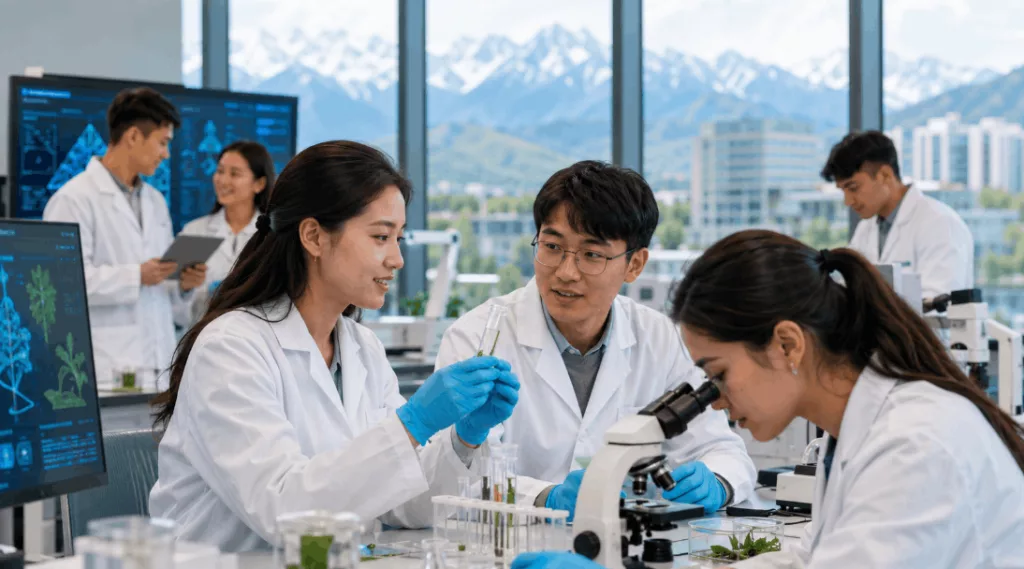
In July 2026, the Kazakh National Agrarian Research University (KazNARU) in Almaty inaugurated an international research laboratory named after Academician George Gao Fu—former Director-General of the Chinese Center for Disease Control and Prevention.
Institutional consortium partners include KazNARU, the National Academy of Sciences of Kazakhstan, Zhejiang University, and the Institute of Microbiology of the Chinese Academy of Sciences. Stated research domains cover biosecurity, agricultural microbiology, and the “One Health” framework, which approaches human, animal, and environmental health as an interdependent ecosystem.
Total project funding was not officially disclosed in bilateral communiqués. Consequently, speculative claims of a “1 billion yuan” capital budget, propagated by some third-party blogs, lack verifiable evidentiary support.
Spatio-Temporal AI Alliance Pledges to Train Hundreds of Engineers
The Kazakhstan-China Science and Technology Innovation Alliance in Spatio-Temporal Artificial Intelligence was established in September 2025. Foundational members include the National Academy of Sciences of Kazakhstan, Zhejiang University of Technology, KazNARU, and Zhejiang Zhonghe Technology Co.
Its stated five-year charter aims to graduate at least 100 students across bachelor’s, master’s, and PhD programs, alongside upskilling over 200 technical specialists annually.

Verified academic and scientific joint projects between Kazakhstan and Chinese research universities.
While target figures sound impressive, they currently represent preliminary targets. Publicly verifiable registries documenting thesis defenses, commercialized AI models, or shared patent registries have yet to emerge.
KazNU Expands to Suzhou: Transitioning from Student Importer to Exporter
On July 16, Al-Farabi Kazakh National University (KazNU) and Suzhou University executed an agreement establishing a joint educational institute. The initiative is designated as KazNU’s inaugural branch campus in mainland China. Phase one outlines three academic curricula, including Electrical Engineering and Artificial Intelligence, with an initial intake of approximately 100 students per track.
This signals an important strategic evolution: Kazakhstan is no longer merely an importer of foreign curricula, but is actively exporting domestic academic degree tracks. That said, financial co-investment structures, revenue splits, curriculum copyright ownership, and precise launch dates remain undisclosed.
KazNU already educates roughly 7,000 international students on its Almaty campus, approximately 2,200 of whom are Chinese nationals. Hence, the Suzhou institute expands upon an established student pipeline rather than building from a standing start.
73 Chinese State Grants and the Introduction of the CSCA Examination
The Government of China allocated 73 fully funded state scholarships to Kazakhstani applicants for the 2026–2027 academic year spanning undergraduate, graduate, and doctoral levels. Awards cover full tuition, monthly stipends, campus dormitory housing, and comprehensive medical insurance.
For international undergraduate applicants, Chinese authorities have instituted the mandatory CSCA examination, testing academic preparation in Chinese language, mathematics, and subject-specific sciences. Discrepancies in Western media over the examination’s exact acronym do not change its operational reality: admission hinges on rigorous standardized testing scores.
Five Confucius Institutes and Luban Workshops Form a Permanent System
Five Confucius Institutes currently operate across Kazakhstan: hosted at KazNU, ENU (Astana), Ablai Khan University (Almaty), Zhubanov University (Aktobe), and Karaganda Technical University. Concurrently, vocational “Luban Workshops” are opening to deliver hands-on technical and industrial engineering training.
This academic footprint proves that China’s educational presence in Kazakhstan is structured for multi-decade longevity. New research labs and joint degree programs are built on top of an extensive, pre-existing linguistic and university network.
The Real Benchmark Will Emerge in Five Years
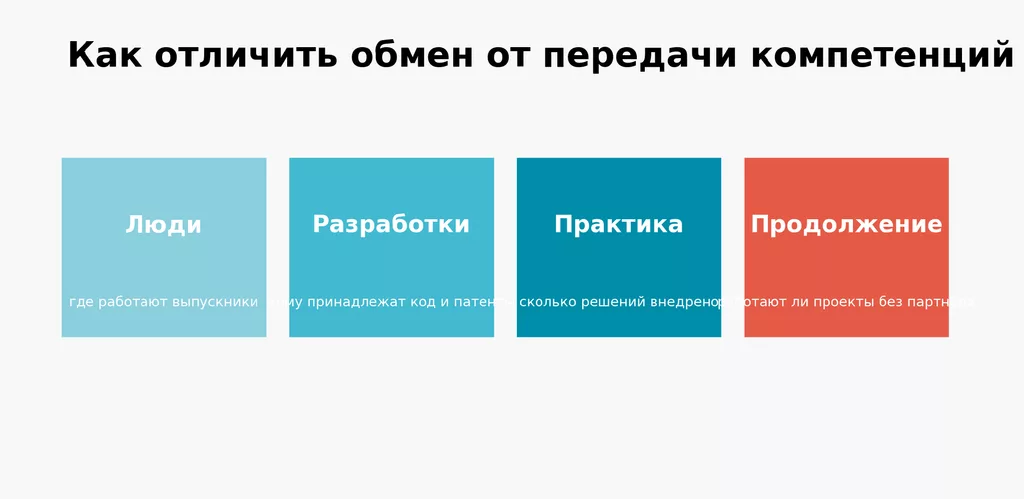
Enrolling students is only the preliminary step. Technology transfer is proven by retained talent, patent ownership, and domestically deployed commercial solutions.
The ultimate success of bilateral academic partnerships must be judged against four uncompromising benchmarks:
- How many graduated scientists and engineers return to practice professionally within Kazakhstan;
- Who retains intellectual property ownership over resulting code repositories, patents, genomic databases, and methodologies;
- How many laboratory discoveries successfully transition into domestic clinics, manufacturing plants, or public infrastructure;
- Can domestic Kazakhstani research teams independently sustain and advance research agendas without indefinite reliance on foreign principal investigators?
Today, the majority of joint initiatives are still in their infancy: the virology laboratory is months old, the AI alliance is less than a year old, and the Suzhou branch campus is formalizing its inaugural intake.
China can provide Kazakhstan with state-of-the-art laboratory hardware, access to top-tier academic faculties, and advanced scientific mentorship. Yet technological sovereignty cannot be transferred through a signed diplomatic memorandum. It takes root only when domestic specialists gain the authority, resources, and intellectual property rights to lead research and engineer their own proprietary products.