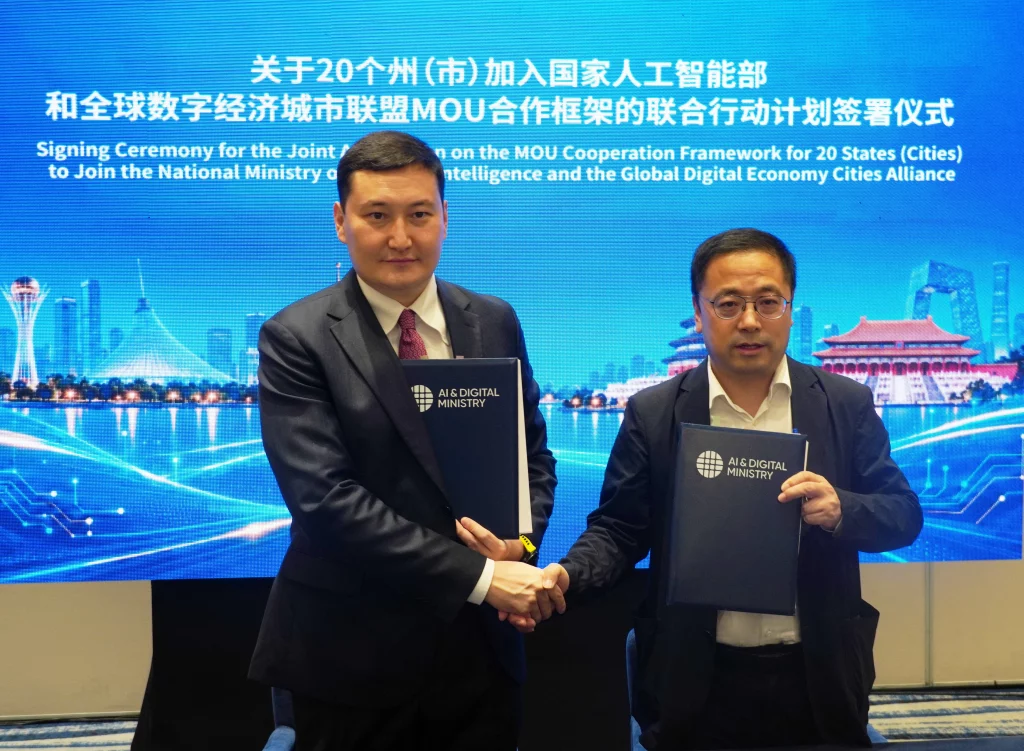
Kazakhstan is preparing to transition toward an “AI-Native” digital regional model, where machine learning algorithms and real-time data analytics are embedded directly into municipal and regional governance. The innovative approach was formally discussed during a collaborative forum between the Ministry of Artificial Intelligence and Digital Development and the international DEC40 alliance in Astana.
On the eve of the AI & Digital Bridge 2026 summit, the ministry, regional digitalization department heads (CDOs), and DEC40 leadership ratified a multilateral cooperation accord. According to ministry officials, this unique format enables regional administrations (akimats) to interface directly with cutting-edge global technology providers under ministerial oversight.
For Kazakhstan’s domestic IT ecosystem, this initiative represents a substantial market for adapting, integrating, and maintaining municipal digital solutions. The eventual size of the commercial opportunity will depend on which pilot programs secure dedicated budget allocations and scale into nationwide deployments.
From Formal Accords to Operational Execution
The foundation of this strategic partnership was established on July 28, 2026, with the signing of a memorandum of understanding between the ministry and the DEC40 alliance. The framework emphasizes Smart City and Smart Region architectures, international technology transfer, foreign venture investment, and technical talent development.
A key operational milestone entails dispatching expert technological taskforces to pilot regions. Specialists will evaluate existing municipal IT infrastructure, review municipal databases, and identify specific administrative bottlenecks addressable via automated AI solutions.
What AI-Native Signifies for Urban Governance
Traditional “Smart City” frameworks typically collect municipal data passively — such as traffic sensor counters or utility telemetry — and store it in fragmented repositories. In contrast, an AI-Native architecture continuously analyzes live urban data streams to drive predictive decisions and automated municipal interventions.
Practical use cases span dynamic traffic signal orchestration to eliminate vehicle gridlock, automated thermal imaging analysis to detect district heating leaks, and machine-learning forecasting of municipal utility consumption. Rather than reacting to public service failures after citizen complaints, administrative systems autonomously predict and mitigate infrastructure stress.
Opportunities for Domestic IT Companies
The national deployment of AI-Native systems creates vast opportunities for local software engineers and system integrators. International tech partners provide foundational models and core architectural blueprints, but localized sensor integration, historical data cleaning, and ongoing support require domestic engineering teams.
Moreover, keeping municipal data processing within domestic data centers aligns strictly with sovereign data security regulations. As pilot programs across regional hubs mature, successful domestic IT contractors can leverage proven municipal case studies to export their urban tech solutions to neighboring Central Asian markets.