
Photo: Bia Limova / Pexels
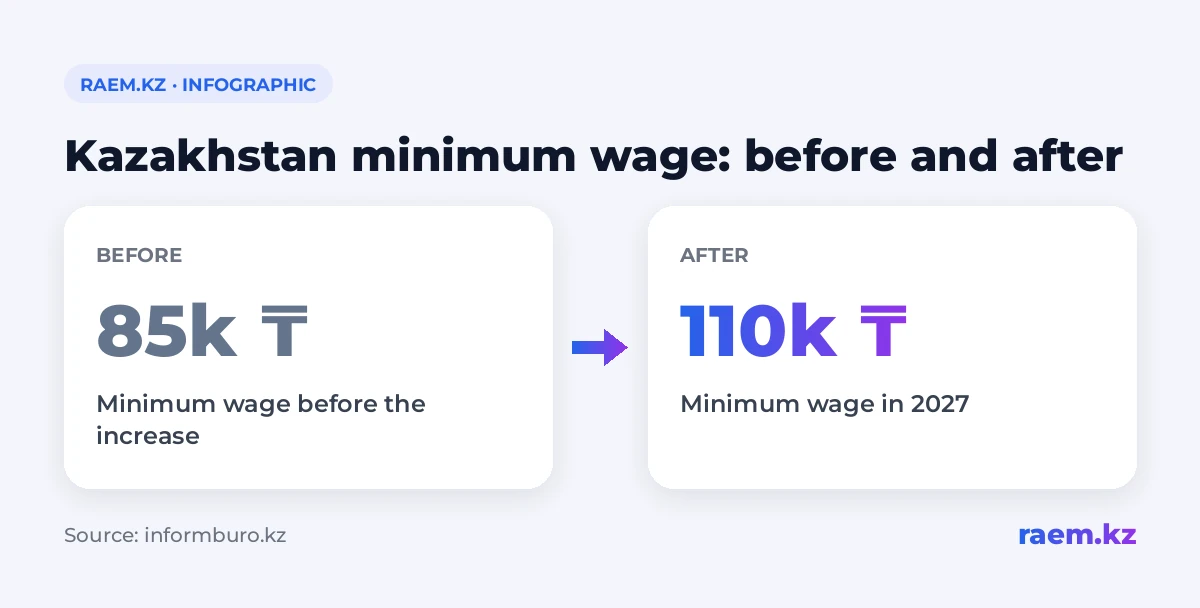
Kazakhstan plans to raise the minimum wage from 85 thousand to 110 thousand tenge in 2027. The change will affect the caps on several social benefits, as well as contribution amounts. On November 18, the Kurultai passed the national budget law for 2027–2029, which includes the minimum wage increase (informburo.kz).
The new minimum wage
The 2027 budget sets the minimum wage at 110 thousand tenge. Lawmakers approved 75.9 billion tenge to fund the increase.
The minimum wage last rose on January 1, 2024, from 70 thousand to 85 thousand tenge.
Social benefits affected by the increase
The minimum wage increase will affect the caps on unemployment, childcare, and pregnancy and childbirth benefits.
There’s an important detail here: these are benefit caps. Raising the minimum wage to 110 thousand tenge does not mean social benefits will be paid at that amount.
Contributions that will change
The minimum and maximum amounts of social contributions depend on the minimum wage. The increase will also affect the cap on mandatory pension contributions.
That makes the change worth factoring in when planning payments for individual entrepreneurs in Kazakhstan.
Earlier discussions about raising the minimum wage to 110 thousand tenge
In June 2025, Finance Minister Madi Takiyev said the budget could support a minimum wage increase. At the time, he suggested a figure of around 90 thousand tenge.
In August, Minister of National Economy Serik Zhumangarin said there were no plans to raise the minimum wage. The government later rejected lawmakers’ proposal to increase it to 110 thousand tenge.
In September, First Vice Minister of National Economy Azamat Amrin said the issue would be discussed by the relevant Kurultai committee. The increase is now included in the budget law passed by lawmakers.
In plain terms
The new minimum wage in the 2027 budget is 110 thousand tenge. The change applies to the wage benchmark and the caps on payments and contributions tied to it.
If you’re planning your personal budget, start by checking who should get a pay rise. Separately, check the rules for your social benefit or mandatory payments.