
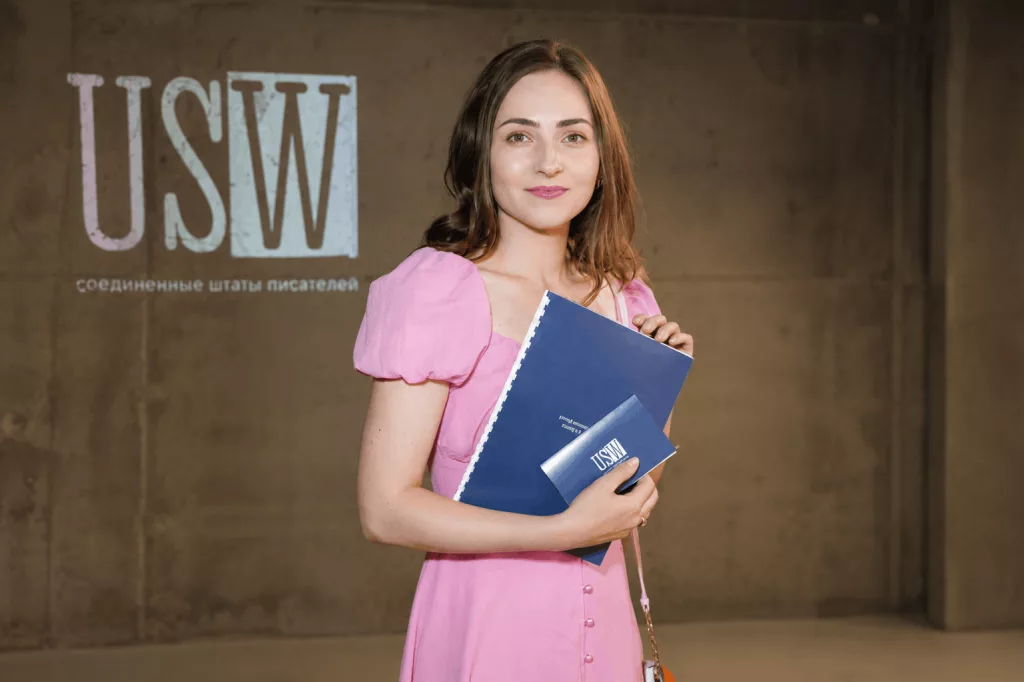
Marina Yels is an Almaty-based writer using the same pen name in Russian and English. She is a writer, literary editor, ghostwriter and translator, and a member of Kazakhstan’s USW writers’ community (@usw_kz). In 2022, she was longlisted for the Qalamdas literary prize under her real name.
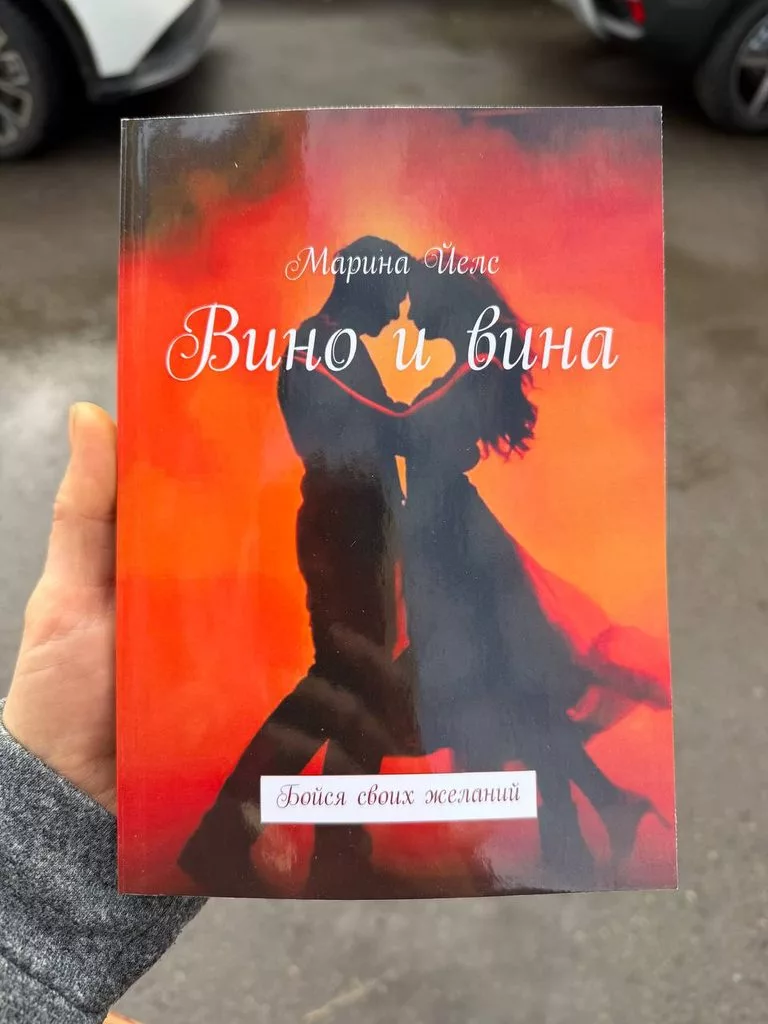
Her debut novel “Wine and Guilt” appeared on LitRes on 4 April 2025: 340 pages, rated 18+, with the author retaining the rights (litres.ru). Its English version is distributed through Amazon, Apple Books, Barnes & Noble, Kobo and other platforms. Western platforms delivered 80 sales in the first quarter of 2026, with royalties averaging around $1.50 a copy. LitRes pays roughly half the royalty rate but brings in more money.
Marina Yels could not register directly with Amazon KDP because her Kazakhstani mobile number was not accepted. A translator by profession, she translated the novel into English herself. Both Russian and English audiobooks were recorded for her free of charge by the platforms. Publishers that had not responded to her manuscript a year earlier approached her themselves that summer.
A Kazakhstani Phone Number Would Not Work for Amazon Registration
— How did you enter the English-language market?
The Russian version came first. My path was LitRes, the easiest way to publish, then Ridero, which distributed the book to marketplaces, followed by Yandex Books in Kazakhstan. Only after that did I begin translating.
I translated it myself. Translation is my profession, so I did not face the question of finding a translator or paying for one.
The main challenge in literary translation is adapting the text to its audience. Jokes, idioms and proverbs can be unfamiliar to foreign readers, so you need meaningful equivalents. My book is set in France, which made adaptation easier because I already had the reader in mind.
Amazon interested me first, but I hit a barrier I had not known about: Kazakhstani mobile numbers did not work for KDP registration. I needed a US number. Only later did I learn that buying an American eSIM could solve the problem.
I found a route through aggregators. Draft2Digital, Lulu and IngramSpark are intermediaries that provide access to Western services without registering directly with each one. I upload to Draft2Digital, authorise distribution and it sends the book to Amazon, Apple Books and dozens of regional services, including Latin American and European ones.
The English version is now on more platforms than the Russian one, even though the Russian edition came first and received all my marketing work.
I did not even approach traditional English-language publishers. In the American market, publishers do not accept direct submissions, only submissions through literary agents. Finding an agent is difficult even for Americans, let alone a Kazakhstani author, when many people in the industry do not know where the country is.
Amazon’s AI-Book Crackdown Raised the Entry Barrier for Everyone
— Would entering the market be as easy now?
No. When I started, there were hardly any requirements beyond moderation. Now Amazon is blocking AI-generated books on a large scale, closing accounts and removing publications. I mean mass-produced content: endless, similar novels about mafia bosses and Cinderellas uploaded by the million. These are “brainrot” books, although I admit they can also be considered guilty pleasures, stories that let your brain relax. It depends on the reader.
Against that backdrop, Draft2Digital also tightened its rules in spring 2026. It introduced a one-off account activation fee; moderation became longer and more thorough, examining what a book is about and where it is distributed. It also introduced minimum earnings rules: if a book earns less than $100 a year, a $12 annual fee is charged. My novel passed because a human wrote it, over several years. Sadly, people uploading AI rubbish have raised the entry barrier for honest authors.
Both Audiobooks Were Produced Free of Charge
— Who paid for the narration?
Nobody. Professional narration is expensive, but it cost me nothing.
Apple Books sent me an invitation to apply for narration. I agreed, and the English audiobook was released on their platform. Zero investment.
LitRes was similar. I ticked a box in my account saying I wanted an audiobook. The platform reviewed and accepted the book, found a human narrator, Marina Filippova, my namesake, and recorded a professional version exclusive to LitRes. A separate synthesised version is available on Yandex Books.
The book is available as an e-book, audiobook and print-on-demand edition in both languages. Ridero handles Russian printing, and Amazon handles English printing.
Print on demand removed the headache. There is no print run to produce, store or write off. A customer orders; the platform prints and delivers. A friend in Germany received a paper copy that way after ordering on Amazon.
Higher Rates in the West, More Money on LitRes
— How much actually reaches you from a sale on each?
Draft2Digital’s report for the first quarter of 2026 showed 80 copies sold, with royalties averaging around $1.50 a copy across formats. The current e-book rate is higher. At a price of $2.99, I receive $1.78, almost 59% after all fees. Amazon takes its share first, then Draft2Digital.
The platform does not provide a breakdown by format. I do not know how many of those 80 were e-books, audiobooks or print-on-demand copies. Reports arrive with a delay, every few months.
My LitRes royalty is only 25% because I did not give them an exclusive licence. The e-book costs RUB 229 there, so I receive around RUB 57 before tax. With an exclusive licence, the rate would be 35% (selfpub.ru). But the book is also available on Yandex Books, Wildberries and Ozon.
If the reader uses a subscription, the amount is very small. I do not fully understand the formula myself.
Russian-language platforms pay considerably less than Western ones. For example, one text-version sale generated RUB 16.64 in royalties and RUB 38.70 in ProRata royalties for subscription reading, totalling RUB 55.34. On another day, I received RUB 31.69 plus RUB 5.89 from subscriptions, or RUB 37.58 per sale. As I understand it, the depth of reading, meaning the number of pages read, also affects the calculation.
Editor’s note: LitRes offers an advanced status with a 50% non-exclusive royalty rate after 200 sales of one book in 90 days and 200 followers on the author’s page. We asked whether it applies here. No, I do not have 200 followers yet.
— But you sell more on LitRes?
Last month LitRes recorded 1,557 book views and 128 sales, compared with 80 copies across all Western platforms in the first quarter of 2026. Another 120 people added it to their favourites on LitRes: potential readers who are interested but not yet ready to buy.
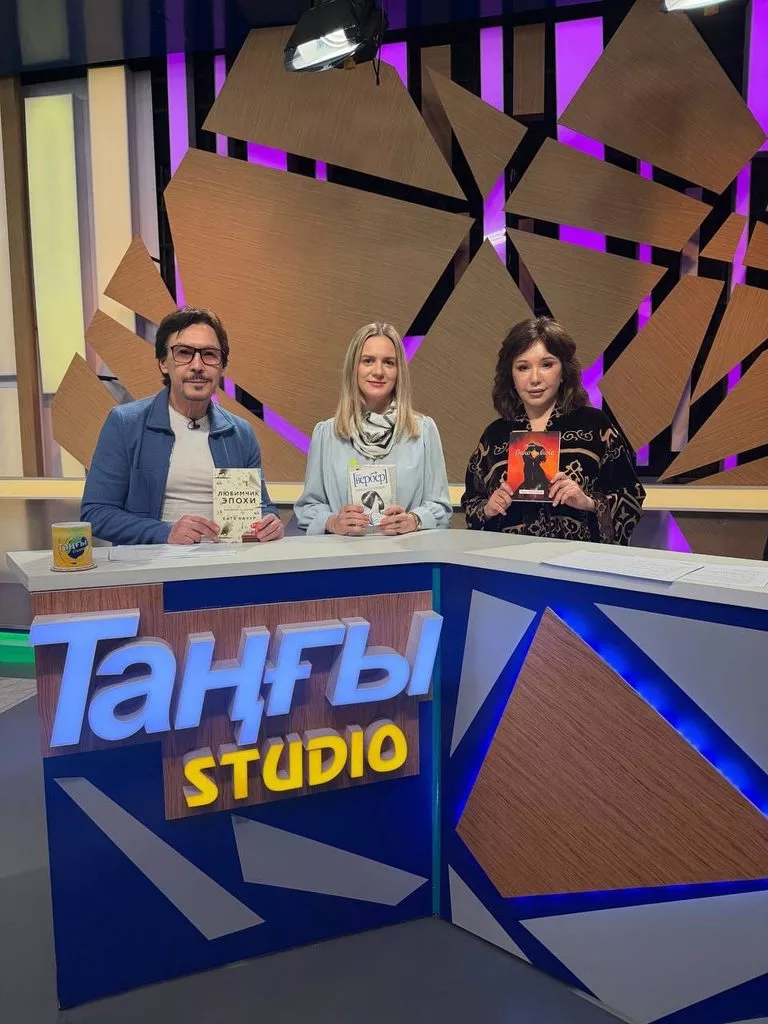
The Russian-language market gave me volume, but not automatically. LitRes promoted the book on its own pages because I entered the platform’s competitions and awards. Several literary bloggers reviewed it, and it appeared on Kazakhstan’s Almaty TV in the “Таңғы студио” programme. All of that helped attract readers.
Prices fluctuate as platforms run promotions. The paperback on Amazon recently cost $17 and is now discounted to $13.55. Barnes & Noble lists the paperback at $17 and the e-book at $2.99 (barnesandnoble.com). Wildberries and Ozon show larger swings: the printed book can cost KZT 11,000, then fall to KZT 7,000–8,000.
The Money Has Accumulated, but Marina Yels Has Not Withdrawn It
— What happens to your earnings?
The money remains on both platforms. I have not withdrawn either balance.
With LitRes, the reason is technical. It is a Russian platform, and moving money between Russia and Kazakhstan is currently difficult. The easiest route for withdrawing royalties would be to open a Russian bank account, which requires being there in person, so a trip. Then I would link it to my account and transfer money from Russia to Kazakhstan, provided the account is not under sanctions.
For the Western earnings, it is arithmetic. Bank fees, currency conversion and 10% tax would be added to platform fees. Little would remain of $1.78 after that chain. At my current volumes, withdrawing makes no sense. I leave it there.
Publishers Declined, Then Approached Her a Year Later
— Why do all this if the book does not bring you money?
The book builds my personal brand as a writer. I never set out to follow Stephen King’s path with my first book. An unknown author without an audience does not take off immediately. I spent several years writing the novel, and after publication it became a tool.
One fact shows whether the strategy works. Initially, I sent the manuscript to publishers myself. With no publications, reviews or audience, they showed no interest. So I self-published. In late July 2026, Kazakhstani publisher CHITODEL signed a contract for a printed Russian edition, with rights limited to Kazakhstan.
By then I was selling in two languages, had ratings and reviews on platforms, and had entered competitions. The novel appeared on literary award longlists and shortlists, including LitRes’ international “Love Between the Lines” competition. Around 1,200 works were submitted, and five shortlisted in my category.
Competition results: see long-form fiction, Best Romantic Fantasy Novel category.
Another result is confirmed: “Wine and Guilt” was longlisted for the 2025 Electronic Letter award in three categories, Book of the Year, Debut of the Year and the special “Love in Every Word” category (https://ebukva.litres.ru/long-list-2025). It did not reach the shortlist published in December 2025.

I signed a three-year publishing contract. The initial planned print run is 500 copies. Royalties are calculated from the actual wholesale value of copies sold: 10% up to 200, 15% from 200 and 20% from 500. The publisher is no industry giant, which I acknowledge, but I want to position myself as a Kazakhstani author, so a paper edition through a Kazakhstani publisher suits me. Online platforms remain my main distribution channel; a printed edition requiring no investment from me is a useful additional sales tool. The immediate goal is to print advance copies for the Fahrenheit writers’ festival (@fahrenheitfest) on 31 October.
Editing and Ghostwriting Pay the Bills
— What do you live on if the book does not support you?
Literature earns me money, just not through my own novel. I provide literary editing services to publishers and work as a ghostwriter, writing books for experts who supply the material and explain the content. Over the past two years, I have written three books that way for politicians and beauty-industry specialists. My work agreements prevent me naming them. I also provide interpreting and written translation.
I wish the state would offer more support to Kazakhstani literature. I know about the Qazaq Creative fund and registered there as a creator. It recently announced a grant that includes literary work, but only legal entities and sole proprietors can apply, and I work as a self-employed person.
State support requires a legal status that a typical author generally does not have. My publisher, however, can compete for the grant.
Eighty Copies a Quarter Do Not Pay the Bills
— Who should avoid self-publishing in English?
Anyone expecting overnight worldwide fame and a living from sales royalties.