

Why Good Content Has Yet to Become a Business
Christopher Trickett has lived in Kazakhstan for 18 years and taught English for 25. He is now trying a new role, developing the English edition of SaqTimes. The project is already attracting readers abroad, but is still building its business model.
Christopher is developing the edition as a founding partner during its launch phase. The team is preparing a media kit and negotiating with its first advertisers.
The newsroom already has articles, writers and its first international readers. The next step is to establish systematic advertising sales, fine-tune its analytics and cover its operating costs.
This story began with professional burnout rather than a business plan, and with an article in which its author could no longer recognise his own writing.
A Cancelled Lesson Became Good News
Christopher has taught English for 25 years. He has worked in the UK, Italy, Egypt, Kyrgyzstan and Kazakhstan. Now he openly admits that he does not want to continue.
“Teachers do important work, but I am no longer interested in it. When a student cancels a lesson, I do not think I have lost money. I think: ‘Great, I am not working today,’” he says.
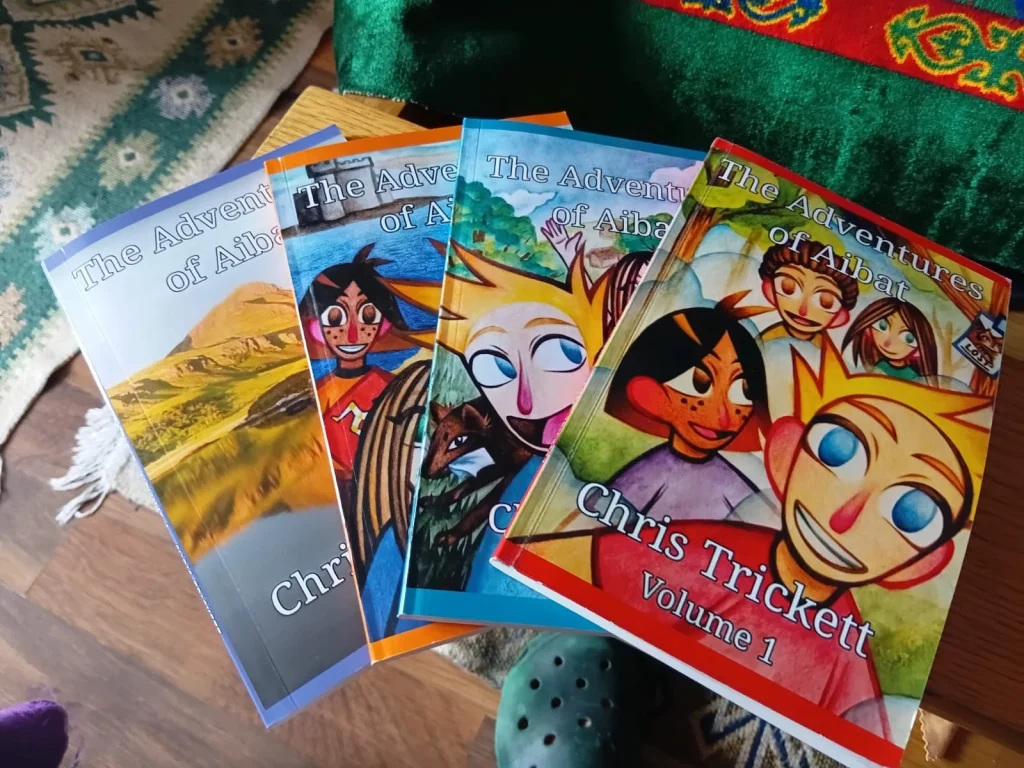
Christopher has also been writing for 30–35 years. For a long time, it remained a hobby. He worked with a British darts website and published four instalments of The Adventures of Aibat for English learners.
About two years ago, he decided to try earning a living through journalism in Kazakhstan.
An Hour Later, Only 40% of the Article Remained
Christopher wrote an article for a Kazakhstani website whose name he does not disclose. The editors accepted the text and published it quickly.
An hour later, he opened the page and barely recognised his work: around 60% of the text had been changed.
“I am not against editing. If there is a mistake or a sentence does not work, it needs correcting. But after those changes, it was no longer my article,” Christopher says.
He does not know exactly who rewrote it, but the style led him to suspect artificial intelligence had been used. What upset him most was that his name remained under the altered text.
“People see my name and think I wrote it. But it is no longer my work or my voice.”
An English Edition Joined an Existing Media Outlet
Christopher then began thinking about a platform where he could take responsibility for his own writing. He did not need to build a media outlet from scratch. He contacted a former student who was already working with SaqTimes. At the time, the site published in Kazakh and Russian.
SaqTimes was founded by experienced Kazakhstani media professionals, and the platform’s corporate governance is separate from the newsroom. Christopher was invited specifically to launch, oversee and lead its English edition with full creative freedom. His official position is founding editor-in-chief of SaqTimes’ English edition, responsible for editorial policy, content production, topic selection and working with writers.
The team decided to launch an English edition. Technical changes to the website took around two weeks. After the launch, Christopher began publishing almost daily.
He chooses the topics himself and is responsible for the English newsroom. It avoids politics and scandals. Christopher writes about Kazakhstan’s culture, sport, tourism, education and everyday life.
One question remains: who needs this product, and how should SaqTimes differ from existing English-language publications about Kazakhstan?

Readers Arrived Before Revenue
According to the newsroom’s estimates, SaqTimes’ English articles receive around 5,000 views a month. An average article attracts 300–350 views. Some pieces about Comic Con Astana and Dastan Satpayev received considerably more.
The team is setting up detailed end-to-end analytics to understand precisely who its readers are, which countries they come from and which articles bring them back.
The newsroom describes its core audience as a contemporary intellectual and professional community: expatriates, international students, researchers, diplomats, sports fans and overseas travellers seeking balanced, substantive information about Kazakhstan’s society, education, culture, tourism, sport and business without sensationalism or clickbait.
The commercial operation is still in its launch phase.
“At the start, I am putting in a lot of effort out of enthusiasm, building a foundation. I want to continue working at SaqTimes, but our shared goal is to make the project commercially successful,” Christopher says.
The project already has a media kit, and the team is building a sales and distribution department. Potential partners include brands that value brand safety and a trusted publishing environment: universities, major sporting organisations and event promoters, tour operators, travel goods brands, airlines, hotel chains, cultural foundations and financial services. Christopher openly says sales are not his speciality, so the project is looking for partners.
This is a familiar situation for many media projects: content is being produced and the first readers have arrived, while the business model is still being calibrated.

A Chance Meeting Opened Up an Audience in India
One of SaqTimes’ most interesting audiences emerged by chance. Christopher met an Indian student on a bus and asked where he could play cricket in Almaty. They began talking, and the student later introduced him to members of the Association of International Students.
This led to articles about Indians studying in Kazakhstan. They were read not only by students in Almaty, but also by young people in India still choosing a country and university.
“They are thinking about where to study: Kazakhstan, Germany or another country. They read that Kazakhstan could give them a good experience,” Christopher explains.
This is where the project could offer a clear benefit to businesses. English-language articles can draw attention to Kazakhstani universities, tourism companies, hotels and other organisations working with international customers.
The newsroom sees a broader benefit too: greater overseas readership about Kazakhstan can build trust and challenge outdated stereotypes. By covering distinctive culture, tourism destinations, sporting achievements, educational programmes and business initiatives, SaqTimes helps Kazakhstan attract international students, thoughtful travellers, sports fans and investors who see the country as a progressive, culturally rich regional hub.
The newsroom still needs to demonstrate that with numbers: who reads its articles and what they do afterwards.
Kazakhstan Needs Both Yurts and Technology
Christopher believes Kazakhstan does not have to choose between tradition and modernity. He personally feels closer to mountains, the steppe, horses and yurts. These distinguish the country and attract tourists. Nature alone, however, cannot build its future.
“Kazakhstan without mountains, horses and yurts would no longer be Kazakhstan. But what future can a country have without new technology?”
The English edition’s motto is “Құндылықтарды сақтаймыз” (“Preserving Values”), which Christopher says does not mean being trapped in the past. Where traditional publications often limit themselves to dry official releases or nostalgic history, SaqTimes tries to connect cultural heritage directly to the modern world, writing about authentic traditions, travel routes, sporting achievements and technology in a living, human voice.
He believes international audiences are interested in both sides of the country. Some visit for nature and adventure; others want to explore its cities, education, business and technology.
That connection is what Christopher wants to show through SaqTimes: explaining the real Kazakhstan to people who know little about it, rather than replacing it with glossy advertising.

AI Can Research, but Should Not Write the Article
The English newsroom has a rule: authors must write their own text. AI can be used to find a topic or gather initial information, but not to produce the finished article.
When Christopher was choosing an intern, five young women responded. He chose Gulnaz. In her first article, he had to change just one word.
“I told her immediately: our rule is not to write using AI. She replied that she wanted to write herself too.”
Christopher is not opposed to editors. He accepts corrections when he makes a mistake, repeats a word or constructs a sentence badly. What matters to him is the boundary between editing and completely replacing an author’s voice.
“Money is necessary. But if a text I did not write is published under my name, that is even worse for me than working for free.”
For a small publication, this is an expensive principle. Human writing requires time, authors and editors. AI allows more articles to be produced at lower cost. Christopher believes such savings also remove what makes a media outlet distinctive: a living human voice.
The Project Still Has to Prove It Can Become a Business
The team has set a trial period running until the end of autumn to assess its progress and consolidate its initial successes.
Christopher intends to continue developing SaqTimes’ English edition and testing its ideas in practice.
“We are giving this launch stage another couple of months to assess the first commercial results and move forward.”
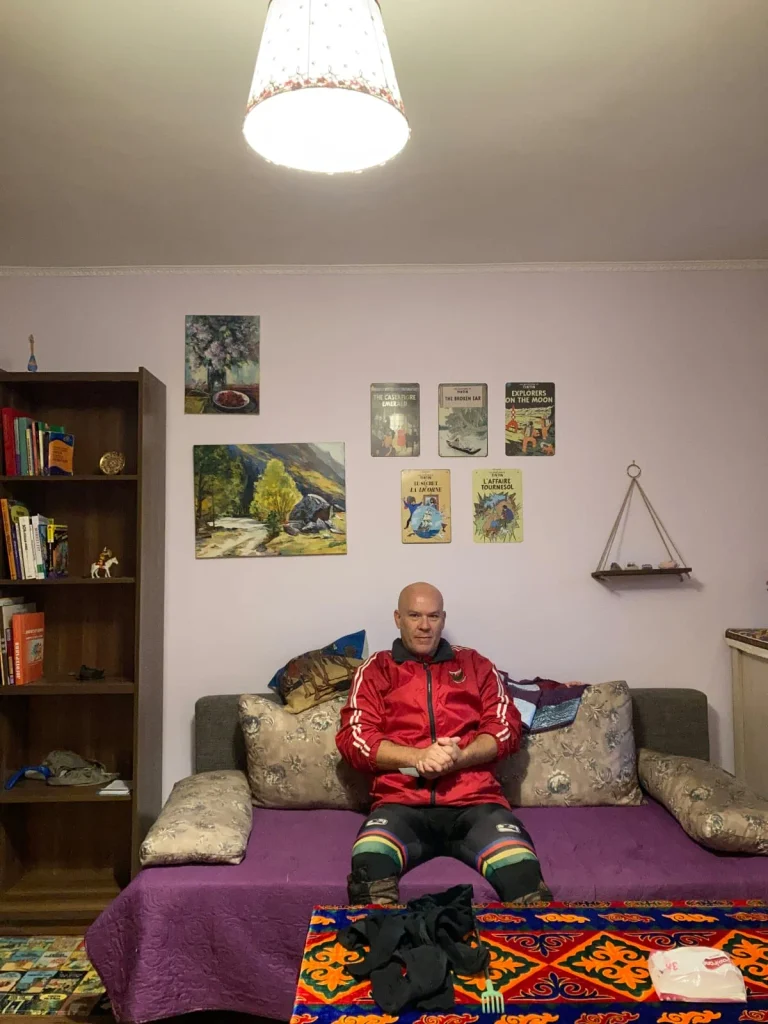
Christopher is almost 53. He is changing professions while the new edition is still assembling its team and attracting its first partners.
The main question is therefore no longer why a British man stayed in Kazakhstan. It is whether a market exists here for quality English-language media, and who is willing to pay for it.
The next few months should provide an answer.